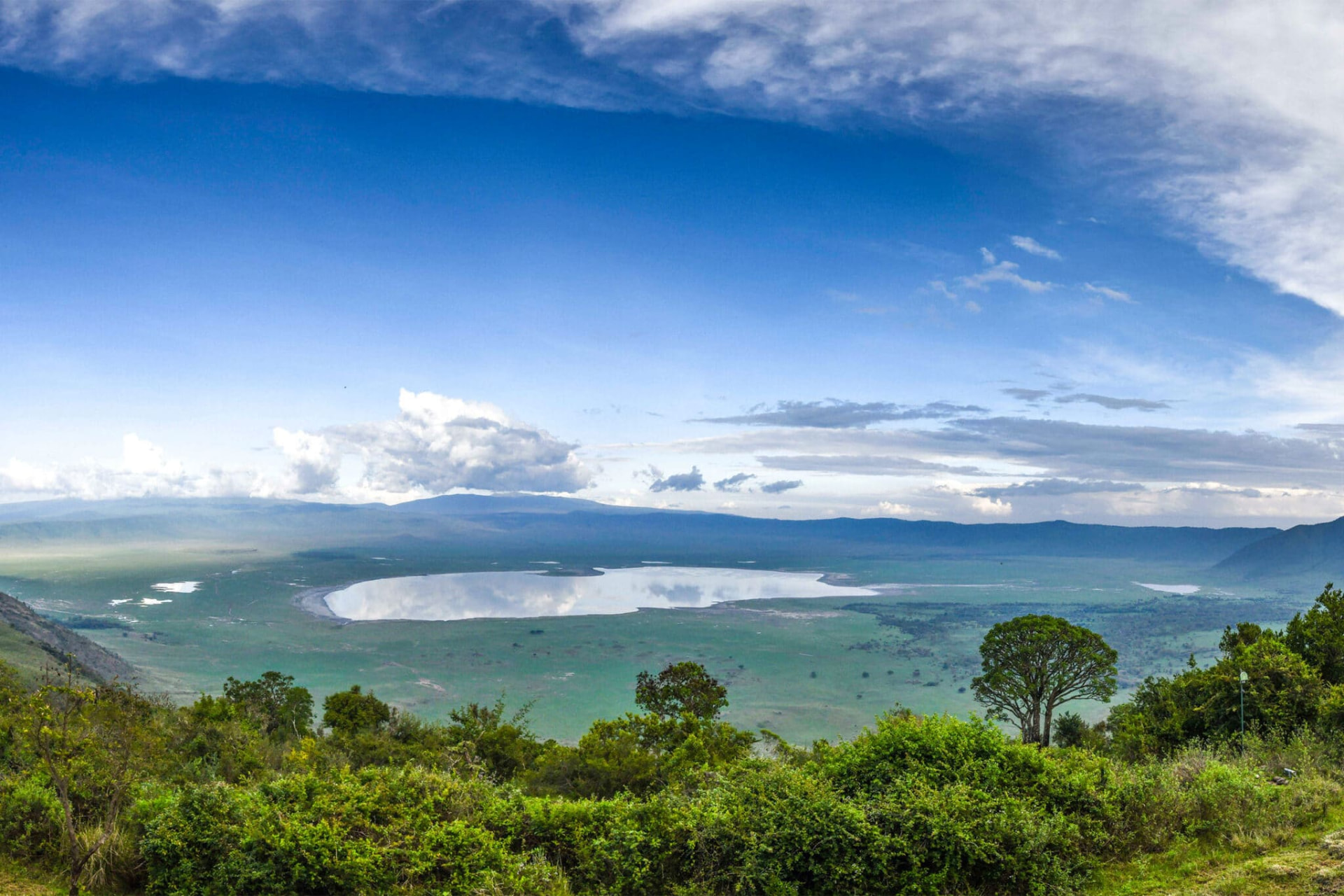
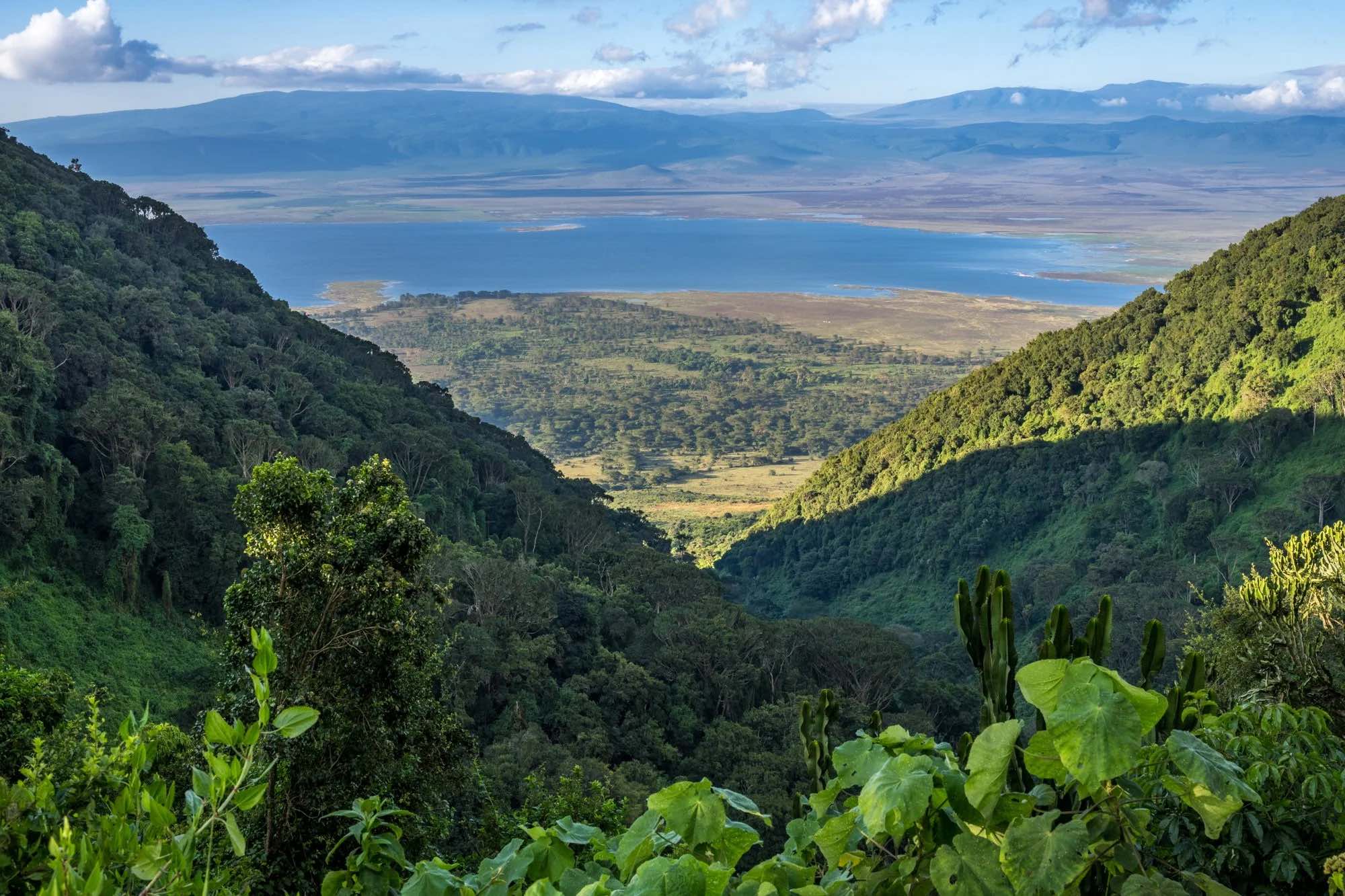
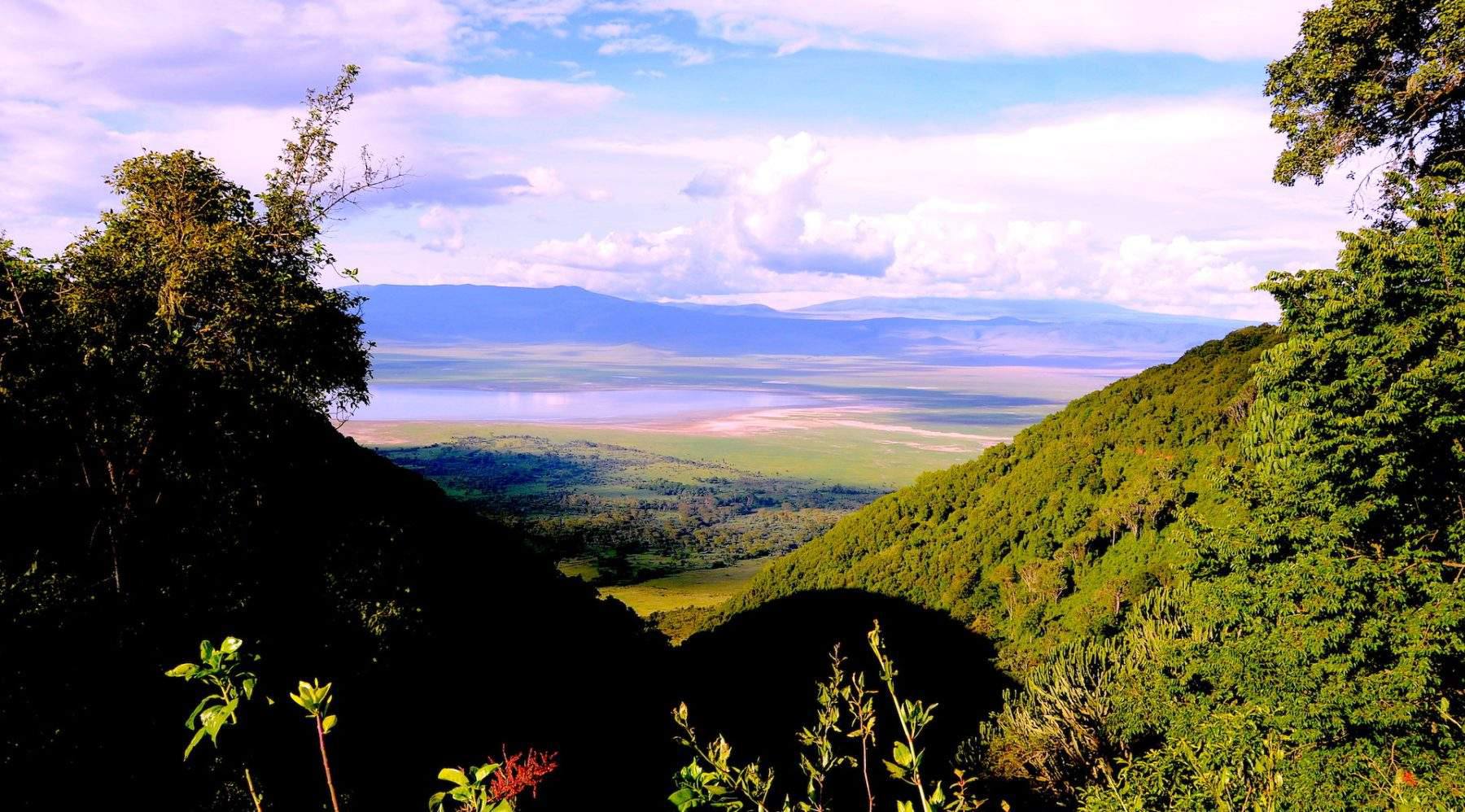
Two-and-a-half million years ago a volcano the size of Kilimanjaro collapsed in on itself. What it left behind is the Ngorongoro Crater: a 600-metre-deep bowl, 19 km across, holding a self-contained ecosystem of grassland, soda lake, forest and swamp.
Discover Ngorongoro Crater
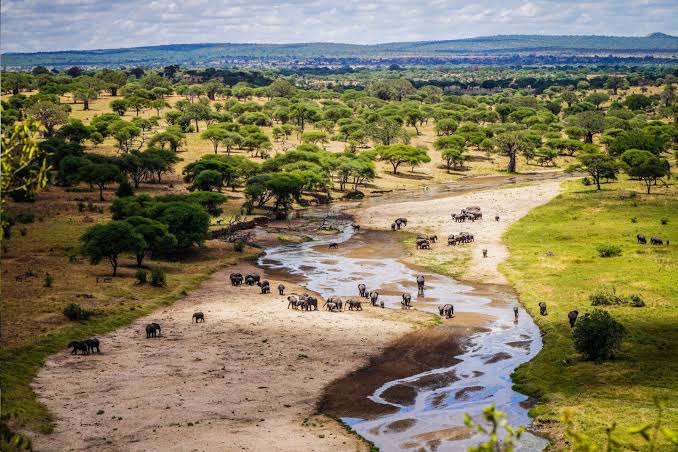
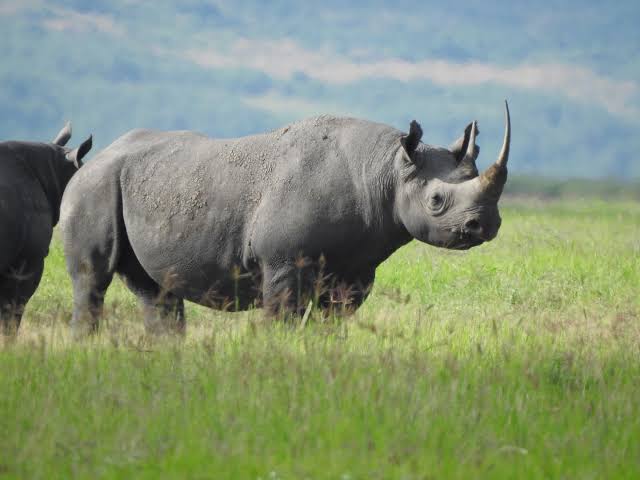
Inside that bowl live an estimated 25,000 large animals — including all of the Big Five (lion, leopard, elephant, buffalo, and one of Africa's last viable populations of black rhino). Because the crater walls discourage migration in and out, sightings are dense and reliable in a way no other park can match.
The crater sits within the much larger Ngorongoro Conservation Area, a UNESCO site shared with the Maasai. You'll see their bomas on the rim and red shukas along the access road — a rare protected area where pastoralists and wildlife coexist by law.
Wildlife in Ngorongoro Crater
- ~70 black rhino — Tanzania's most reliable rhino sighting
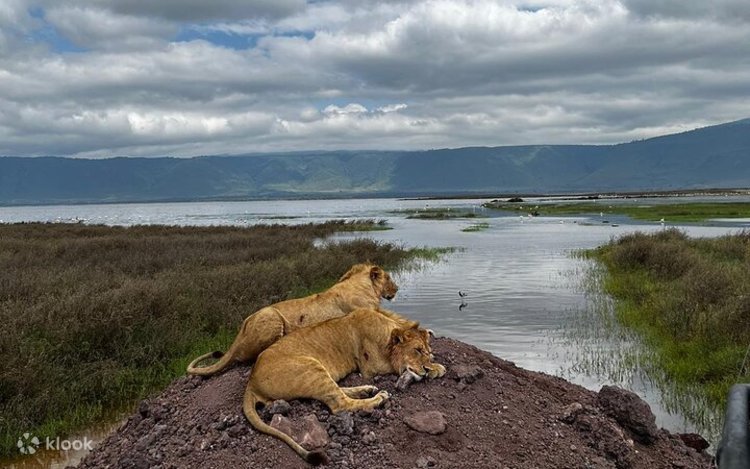
- Densest lion population on the continent
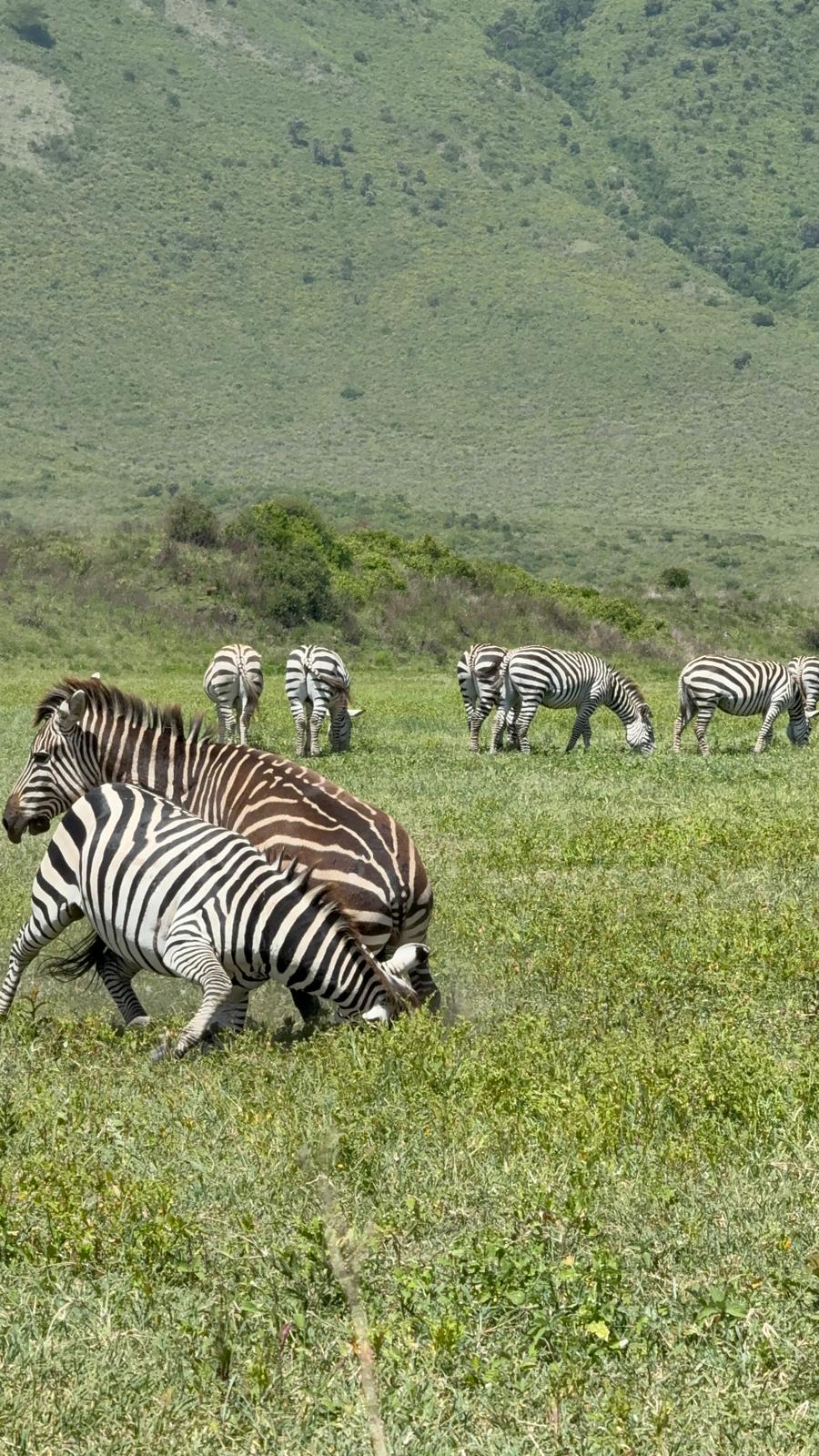
- Big herds of buffalo, wildebeest and zebra
- Hippos in Mandusi swamp
- Greater & lesser flamingos on Lake Magadi
- Crowned crane, kori bustard, ostrich
Every drive is different — sightings are never guaranteed, and your guide reads the bush as you go.
Excursions and activities in Ngorongoro Crater
Crater descent at dawn
Gates open at 06:00. We aim to be the first vehicle down — the floor is mist-soft and the cats are still active.
Picnic at Ngoitokitok Spring
Hippos in the foreground, kites overhead trying to steal your sandwich. The only official picnic site inside the crater.
Maasai cultural visit
A scheduled, fair-trade visit to a working boma on the rim. We only work with communities where you visit by invitation, not as a transaction.
Olduvai Gorge
30 minutes off the access road — the 'cradle of mankind' where the Leakeys uncovered 1.8-million-year-old hominid remains. Worth a museum stop.
Travel time to Ngorongoro Crater
- Arusha → Crater rim: ~3.5 hours.
Travel tip from our guides about Ngorongoro Crater
Permits inside the crater are now capped at 6 hours. Stay on the rim the night before so you're at the gate the moment it opens — you get the cats while the other vehicles are still on the access road.
How long to stay? One full crater day is the standard — half-day descent (06:00–13:00) is what most permits allow. A second night on the rim lets you do a second descent or a half-day Olduvai/Maasai cultural visit.
Best time to visit Ngorongoro Crater
Year-round. Dry season (Jun–Oct) for clearest game viewing.
- Jun–Oct: dry, cool on the rim (pack a fleece — it can drop to 10°C at sunrise), clear sightings on the floor.
- Nov–May: greener, fewer vehicles, mist on the rim adds drama to early descents. Rhino sightings are equally good year-round.
Would you like to add Ngorongoro Crater to your itinerary? Browse our Tanzania safaris for inspiration, or contact us for personal advice.